
Watefall vs. Agile vs. Scrum vs. Kanban

As a first-time software founder, how do you manage your team? Do you use Waterfall project management methodology, Agile, Scrum, or Kanban? These are questions I hear from our new clients every day.
You might think, “I’ll just hire a development team with a project manager, and they will do the job for me.” But that’s not entirely correct.
When you hire foremen and a development team, you still need to understand the basics of house construction to have realistic expectations and control whether things are going right or not. The same applies to building software. Any software development project is a long-term engagement, so you better know what you’re doing.
In this article, I’ll explain all the terms and give a specific step-by-step formula on how to successfully work with a team of developers. I’ll also show you which management method to use at different stages of your software product lifecycle.
This article will be the only resource you’ll need from now on to build tons of software, SaaS products, and mobile apps.
Now, let’s start with the first project management methodology!
Waterfall Project Management Methodology
The Waterfall methodology is a well-established project management workflow founded in 1970 by Winston Royce.
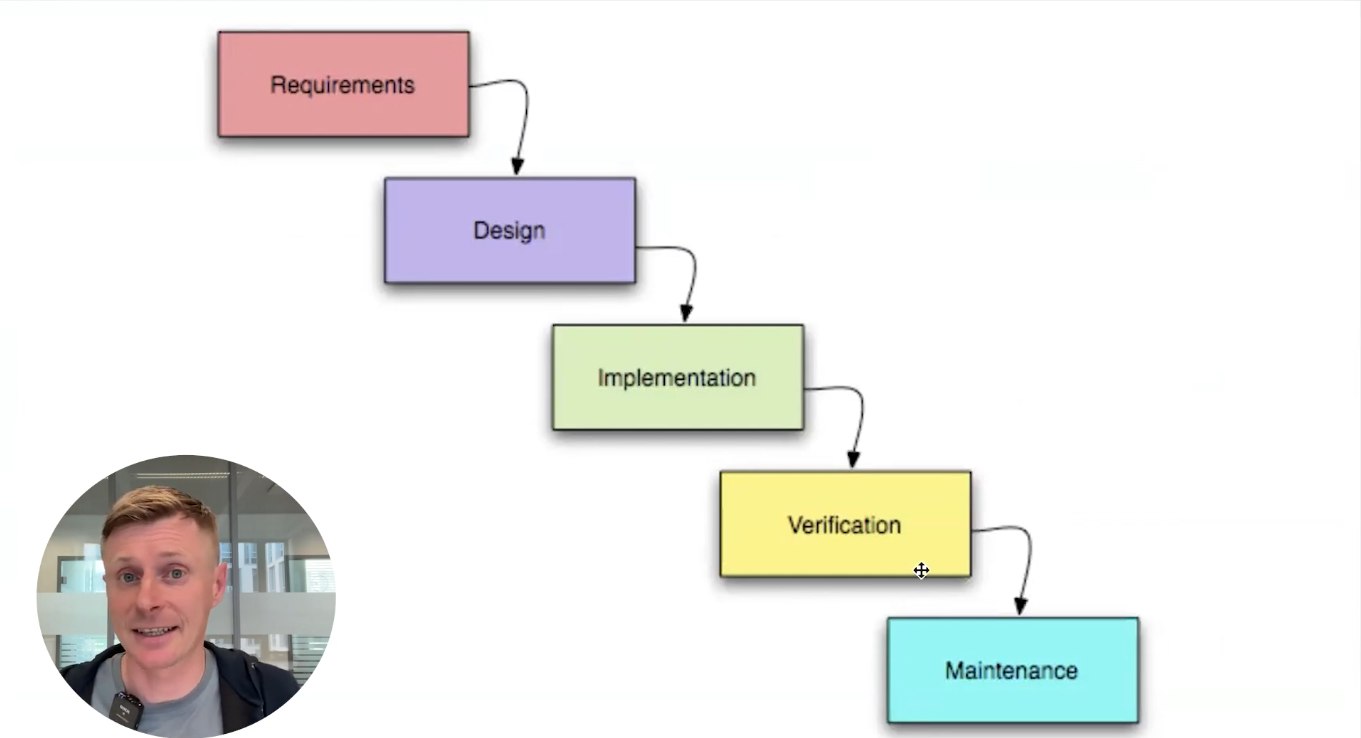
Like a waterfall, each process phase cascades downward sequentially through five stages: requirements, design, implementation, verification, and maintenance.
Waterfall is ideal for software development projects where the end result is clearly established before starting, and it is best suited for projects that require a lot of predictability. In these projects, we usually have a fixed budget, fixed deadline, and fixed scope.
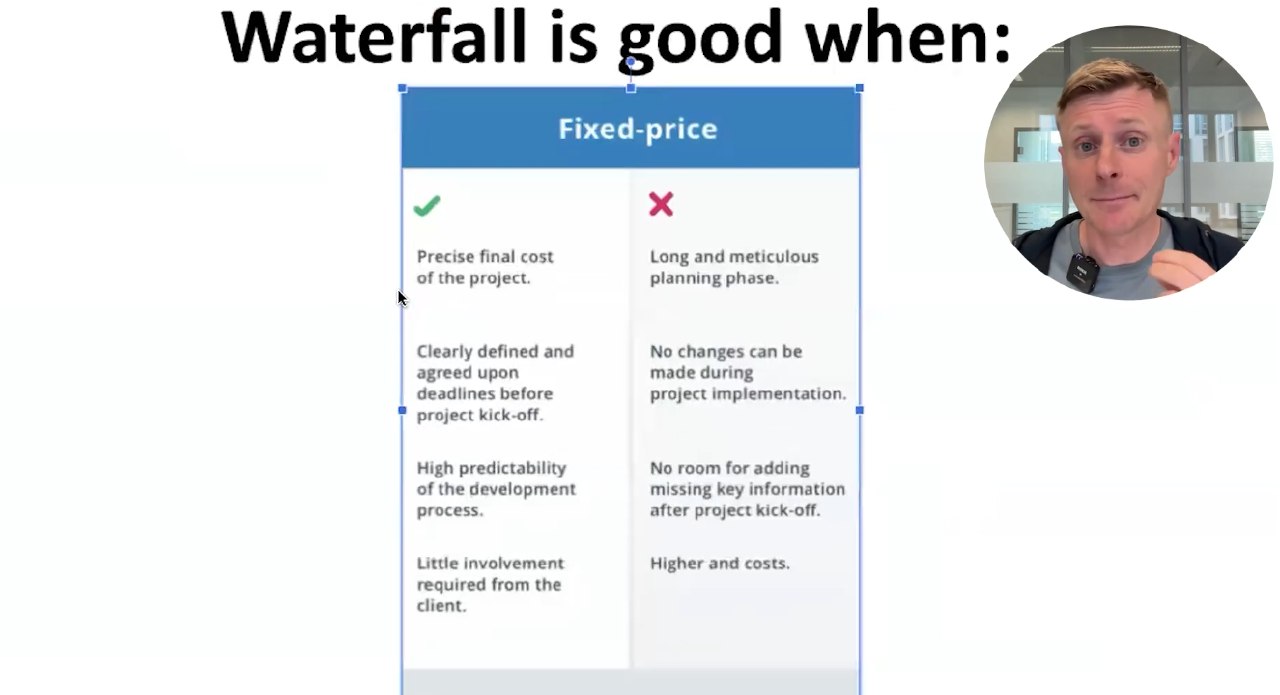
In Waterfall, the team puts significant effort into the planning and discovery phase, which is crucial to the project’s success. The top three project management software that support the Waterfall methodology are Monday.com, Wrike, and Smartsheet.
Waterfall is great for huge, complex software like Microsoft Windows OS or for enterprise digitalization projects, where everything is defined, and there is no room for experimentation or change in the middle of development. Also, it’s good for regulated industries, some of the government, construction, and defense-related projects.
Agile Methodology
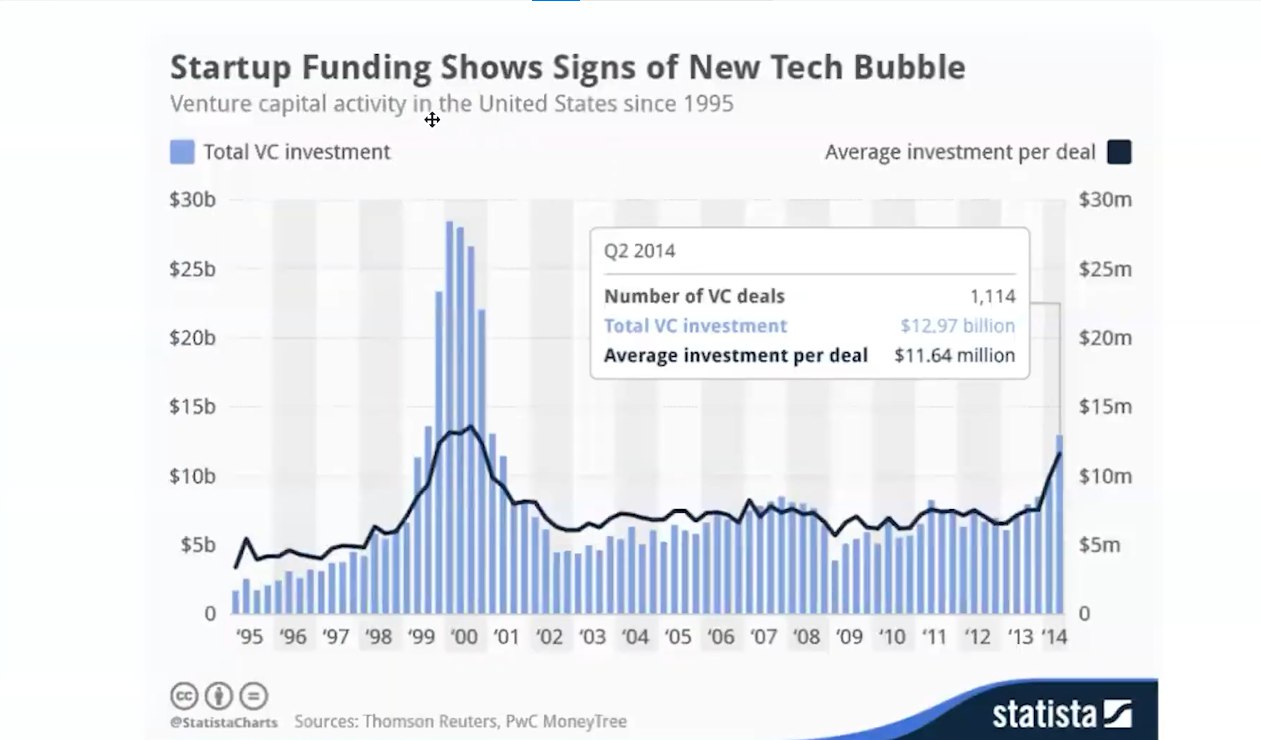
As technology advanced and more technical startups emerged, it became clear that the Waterfall methodology was not well-suited for these dynamic and rapidly changing projects.
In 2001, the Agile Manifesto was created by 17 technologists. It introduced four main principles:
- Individuals and interactions over processes and tools
- Working software over comprehensive documentation
- Customer collaboration over contract negotiation
- Responding to change over following a project plan
Agile methodology was designed for a smaller, more startup-friendly environment where the conditions change frequently, requiring teams to adapt quickly. It emphasizes flexibility, experimentation, and hypothesis testing. Most modern software development teams, especially in tech startups, have adopted the Agile methodology.
The top three project management software that support Agile methodology are Jira, Trello, and Asana.
4 principles of the Agile Manifesto laid the foundation for the methodology, but how do we apply them to real-life projects? This led to the development of the two most popular implementations of the Agile Manifesto: Scrum and Kanban.
Scrum Framework
One of the most popular implementations of Agile methodology is the Scrum framework.
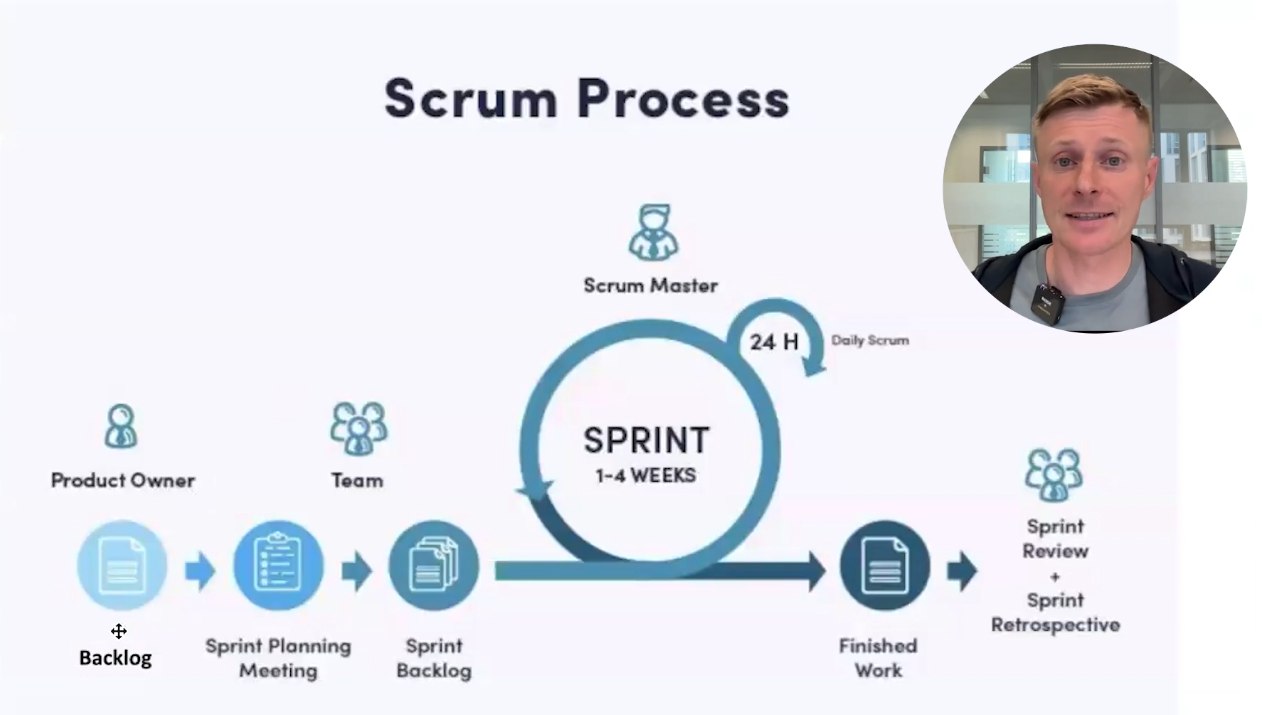
Scrum is ideal for small teams of 4 to 9 people and includes roles such as the Product Owner, Scrum Master, and Development Team. In Scrum, there is a backlog containing all the tasks to be completed in the future.
Work is organized into Sprints, typically lasting two weeks. Each sprint begins with a sprint planning meeting where tasks are pulled from the backlog into the sprint backlog, estimated with Story Points using Scrum Poker, and then the work begins.
Daily stand-up meetings, lasting about 15 minutes each, help keep the team aligned. At the end of the sprint, completed work is packaged for release and deployed. Any incomplete items are returned to the backlog. The sprint concludes with two rituals: a results demonstration and a sprint retrospective.
Scrum is excellent for active software development projects that require regular production of new features. It allows for batch releases, which are more manageable than releasing every new feature separately.
Kanban Method
Another very popular implementation of Agile methodology is the Kanban method. Kanban differs from Scrum in several key ways.
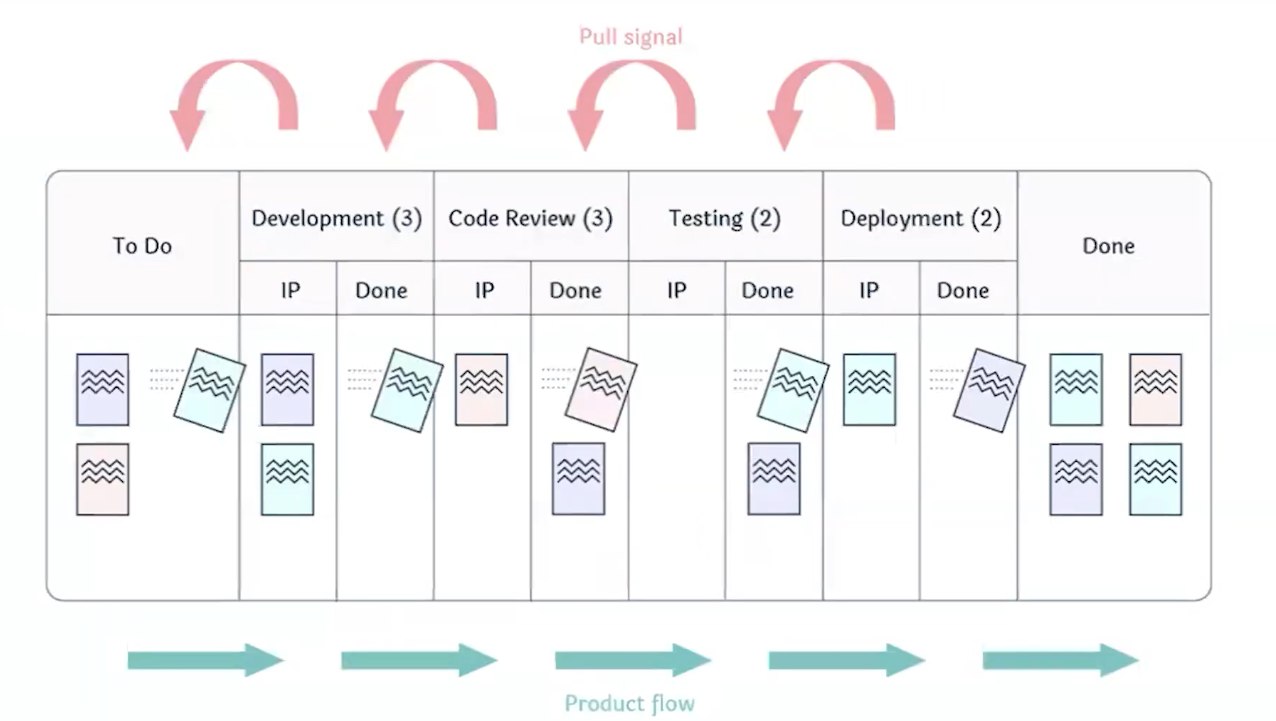
Firstly, there are no two-week sprints in Kanban. Instead, Kanban is a continuous system that uses a Kanban board. On a Kanban board, tasks are pulled from the backlog according to the team’s capacity. As soon as one task moves from “In Progress” to “Done,” a new task is pulled from the backlog.
Additionally, tasks in Kanban are deployed as soon as they are ready without bundling multiple tasks together for deployment. This means deployments can occur daily or even multiple times a day.
While Scrum is ideal for the ongoing development of new, large features within your software, Kanban is best suited for support and maintenance, where new updates are pushed to the production server as soon as they are ready.
So,
What Project Management Methodology should you choose for your Software Development Project?
If you’re a well-established company looking to automate your processes with custom-built software, have a clear vision of the desired outcome, including all functions, and expect minimal changes during the project, then the Waterfall methodology is ideal for your software development.
However, if your project requirements are not well-defined, if you anticipate many changes along the way, and if you are willing to stay flexible with specifications, functions, budget, and scope, then Agile is the better approach.
Most tech startups, SaaS products, and mobile apps are developed using Agile methodologies these days.
Now, how do you choose between Scrum and Kanban?
When starting development, use Scrum with two-week sprints and regular demo sessions. This is ideal for the active development phase, allowing you to build and iterate on large features.
Once your software is deployed to production and you begin onboarding users or company employees, switch to Kanban for support and maintenance. This allows each fix or small request to be deployed to production as soon as it’s ready.
In most cases, you’ll have two task boards: one Scrum board for active, larger development projects and one Kanban board for maintenance tasks. This dual-board setup ensures that both new development and ongoing maintenance are managed effectively.
If you follow my guidelines from this article, you’ll be better off than 90% of all first-time software founders!
If you are a first-time software founder and want to learn more about managing software projects, I highly recommend my free online course on building software with your team.

If you are interested in having my in-house developers build your SaaS product or in having me as a mentor, please fill out the application form!