
What is AI? How AI Works & Where is AI Used? (Artificial Intelligence, Machine Learning, ChatGPT)

AI, ChatGPT, and Machine Learning — all these terms have been hyped over the last 2 years. At this point, it’s kind of a bubble a bit, and there’s a lot of misunderstanding among people and businesses. So, in this article, I’ll answer all these questions and also give you a few hints on how you can leverage AI and Machine Learning in your life and your business to make it more efficient and save some time & money with it.
What is AI and how it works?
Explaining complex technology in simple terms is no easy task, but I’ll give it a shot. Artificial Intelligence (AI) got its name for a reason. It’s based on neural networks at the core of the human brain’s functions. A neural network is a method designed to imitate the human brain to create an artificial one with all its advantages and disadvantages. And the best part is that while the neural network mechanism is simple by nature, the results it produces and its ability to improve and learn on its own make it harder for the creators to predict the outcomes of neural network applications. Just as the human brain has many mysteries for scientists, the neural network remains a kind of black box for data scientists and software engineers. This is the most exciting and dangerous aspect of Neural Networks and AI in general.
To understand how AI works, we first need to understand how the human brain works. As a child grows, their brain develops and produces better results over time, right? This development relies on three core components.
The first is knowledge.
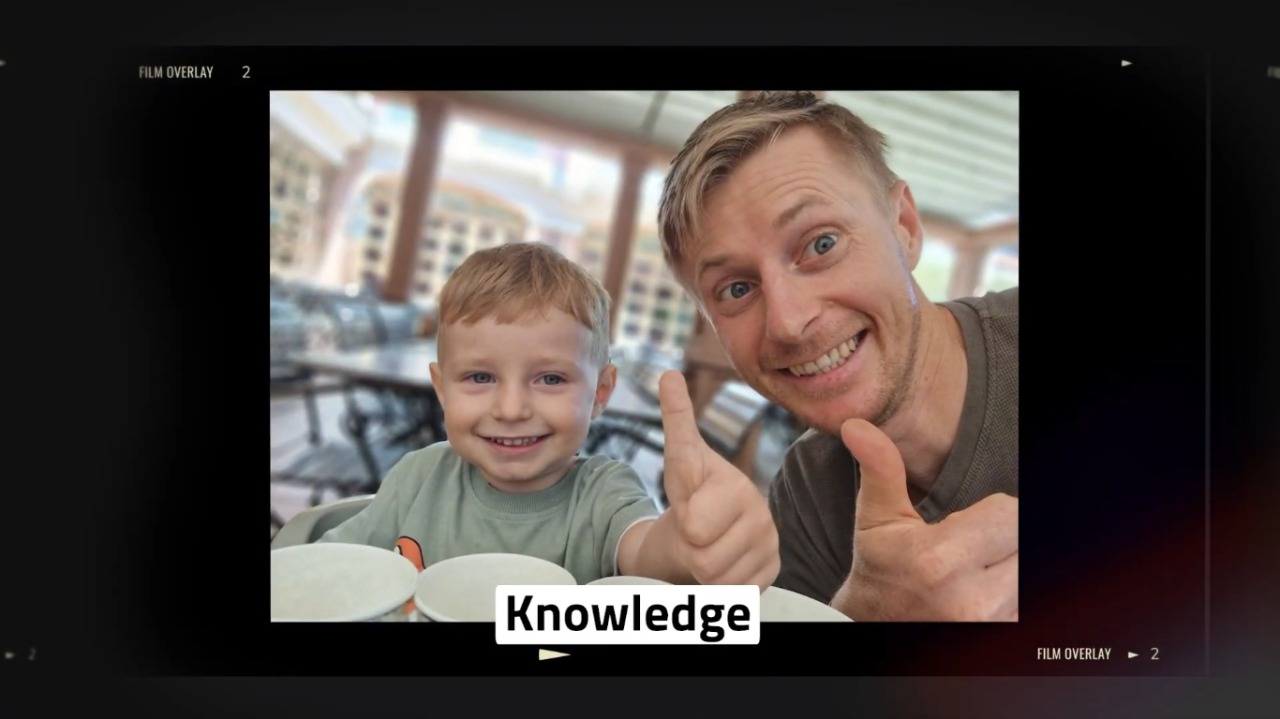
Take my 4-year-old kid, Alex. I read books to him daily so he can learn about the world. This is the foundation. You need to know the multiplication table to solve complex math equations, right? However, knowledge alone isn’t enough to raise a scientist. Knowledge can be misinterpreted or misused, and math equations can be solved incorrectly despite having all the theoretical knowledge.
This is where the second component comes into play: training.
Every kid in school has a teacher who assigns and checks homework, administers exams, and provides feedback. Now, the student will know whether they’ve applied their knowledge correctly to solve practical tasks.
The third component, not as clear but very important, helps us grow into not just smart, but good people who follow society’s rules and don’t hurt others.
This includes things like religious beliefs, laws, and traffic rules. Without them, we couldn’t tell right from wrong or kind from mean.
For a child to develop into a reasonable and intelligent adult, our brains need: Knowledge, Training, and Rules.
The Artificial Brain, or AI, needs all the same things. It’s created in a very similar way. Data scientists feed their neural network with tons of information, books, and common knowledge from the internet. Then, through human-based or automated training, they teach AI the right and wrong solutions to practical problems and tasks. Finally, software engineers implement numerous workarounds, restrictions, and regulations around the neural network’s capabilities to make it adequate, ensuring it’s not harmful and understands what is good and what is bad. Now, I hope this explanation makes AI more evident.
What AI is not?
AI is not a magic pill that will automatically improve your life or business. Like the human brain, with its flaws and complexities, AI can be used as an assistant to handle basic tasks, but it still requires expert oversight and refinement. AI “like humans” can make mistakes and sometimes produce completely incorrect outputs. Often, its output might be 70-80% accurate or too vague without the extra human touch.
Among programmers and scientists, there’s a saying: if you can develop your app without using AI and ML, then do so with a simple algorithm instead. It will be 100% accurate, and you’ll always know the reason behind the output. Thus, AI and ML are tools to help people work more efficiently. Currently, AI cannot fully replace a human expert or professional. However, in the future, it is expected to improve and become an independent tool capable of completing tasks in any industry we need.
Where is AI Used?
The application of AI is already extensive and diverse. People and businesses are utilizing AI and ML across various industries:
- In healthcare, it is for treatment recommendations and drug development.
- In Finance, for algorithmic trading, fraud detection, and personal finance.
- In Customer Service, for chatbots and virtual assistants.
- In Transportation, for self-driving cars and traffic management.
- In manufacturing, it is for supply chain management and predictive maintenance.
- In Entertainment and Media, for content recommendation and game development.
- In Education, for personalized learning.
- In Marketing, for targeted advertising and Content Creation.
- In Security, for surveillance and cyber threat detection.
How Can You Leverage AI in Your Life and in Your Business?
Two years ago, my agency began incorporating AI tools across every department. We use ChatGPT to write software code and marketing materials. Canvas UI tool, powered by AI, helps us create visuals, slide decks, and video content. For market research and sales forecasting, we rely on specialized AI software. We’ve also developed and integrated AI chatbots to enhance service for our clients and website visitors. Our CRM benefits from AI integration, improving lead follow-up. AI has even been integrated into our HR and recruitment processes to refine hiring and onboarding.
But AI isn’t just for the digital realm, agencies, or tech giants. We’re embedding AI/ML into our client’s software, adding small yet impactful enhancements. AI is for everyone.
- Do you own a café? Imagine a chatbot that knows your client’s order before they do.
- Running an online store? AI can anticipate your customers’ preferences, making you an unmatched salesperson.
The trick is finding where AI can take over the boring stuff, letting you focus on the fun parts of your business. And the best part? Starting isn’t hard. A little creativity and you’re halfway there.
So, if you want to learn more about AI & ML, follow the new blogs on our website!
Keep up the great work! Thank you so much for sharing a great post.