
ERP Trends: Exploring the Future of Software and Technology

In today’s rapidly changing business landscape, organizations must stay competitive and efficient. This is where Enterprise Resource Planning (ERP) systems come into play.
ERP systems have evolved significantly over the years, becoming indispensable tools for businesses seeking operational excellence, compliance, and strategic advantage.
In this article, we will delve into the vital role that ERP systems play in modern business operations. We’ll explore the driving forces compelling companies across various industries to embrace these advanced solutions. Additionally, we will uncover the top nine current trends in ERP that are shaping the future of enterprise technology.
As we navigate through these insights, keep in mind that having the right expertise and guidance in selecting, implementing, and optimizing your ERP system is paramount.
That’s where SoftFormance, with its extensive experience in ERP development and solutions, can be your invaluable partner on this transformative journey. So, let’s embark on this journey of understanding the significance of ERP systems and emerging trends on ERP.
Importance of ERP Systems in Modern Business
In today’s fast-paced and highly competitive business environment, the adoption of Enterprise Resource Planning (ERP) systems has become nothing short of a necessity. These sophisticated software solutions play a pivotal role in shaping the operational landscape of organizations across various industries.
Before we explore the evolving trends in ERP systems, it’s crucial to understand why ERP systems are indispensable for modern businesses.
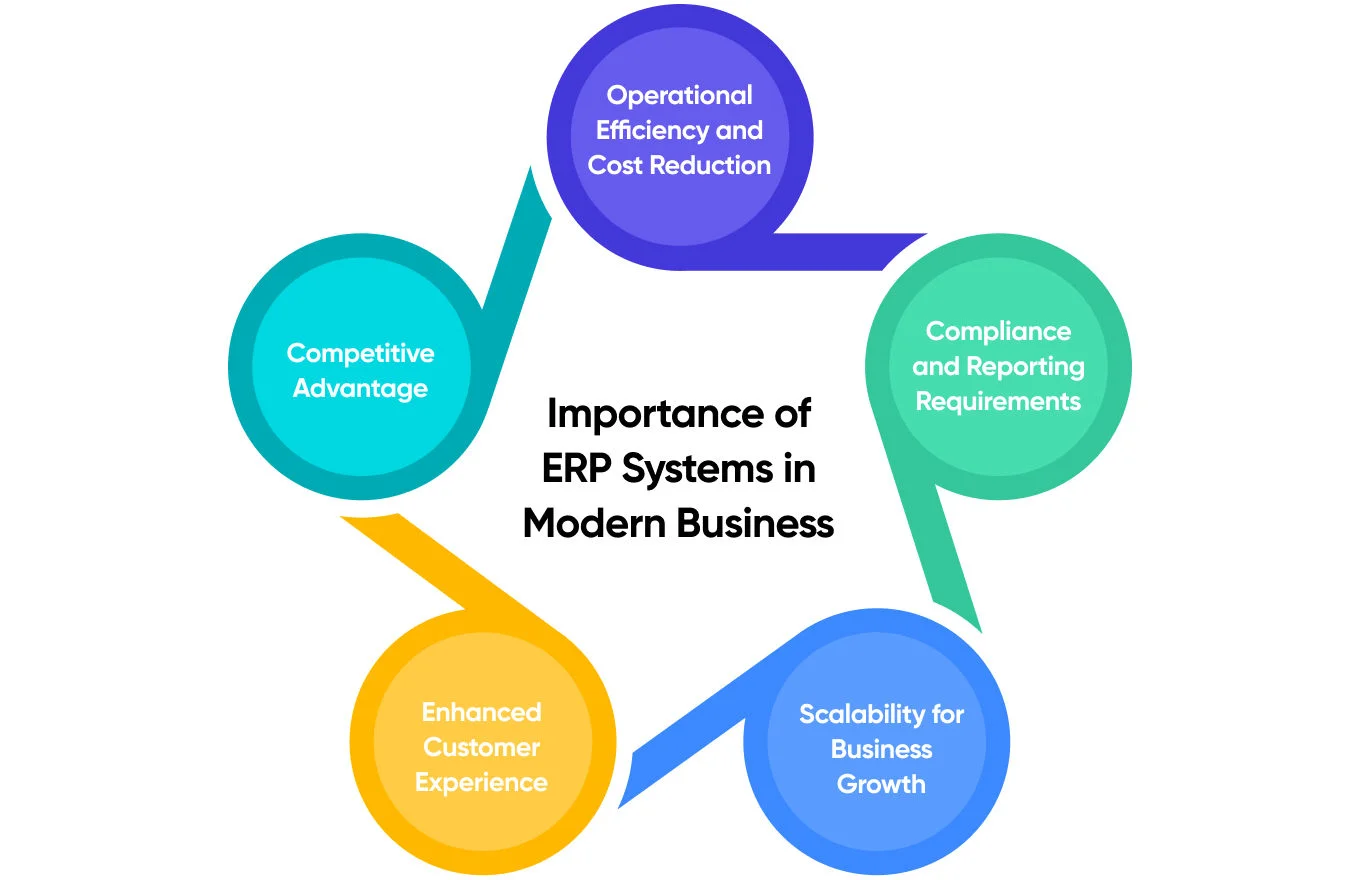
- Operational Efficiency and Cost Reduction: At the heart of ERP systems lies the ability to streamline complex processes, eliminate redundancy, and optimize resource allocation. The outcome? A notable increase in operational efficiency and a significant reduction in costs. In an era where efficiency and cost-effectiveness reign supreme, ERP systems emerge as the linchpin of organizational success.
- Competitive Advantage: In the ever-evolving landscape of modern business, competition is fierce. Companies that stand out are those equipped with well-implemented ERP systems. These systems empower organizations with the agility to make rapid and informed decisions. Moreover, ERP solutions provide valuable insights into business operations, allowing for data-driven strategies that set businesses apart from their rivals.
- Compliance and Reporting Requirements: Stringent industry regulations and reporting standards have become the norm in sectors such as healthcare and finance. ERP systems play a pivotal role in ensuring organizations adhere to these standards and streamline compliance processes. ERP systems reduce the risk of regulatory violations and associated penalties by automating compliance-related tasks and data tracking.
- Scalability for Business Growth: Growth is the ultimate goal for businesses, but with growth comes the challenge of scalability. Companies need systems that can seamlessly adapt to their evolving needs as they expand. ERP systems are purpose-built to accommodate business growth, ensuring that processes remain efficient and effective, whether a company is scaling up or diversifying its operations.
- Enhanced Customer Experience: Customer satisfaction is the lifeblood of any business. ERP systems enhance the overall customer experience in various ways. They enable faster response times to customer inquiries, provide better product tracking, and facilitate improved communication with customers. As a result, businesses can build stronger relationships, enhance brand loyalty, and gain a competitive edge in the marketplace.
Top 9 ERP Software Trends
As businesses evolve and adapt to the ever-changing landscape of technology and customer expectations, so do Enterprise Resource Planning (ERP) systems. These systems, designed to streamline and optimize various aspects of business operations, are not immune to the winds of innovation.
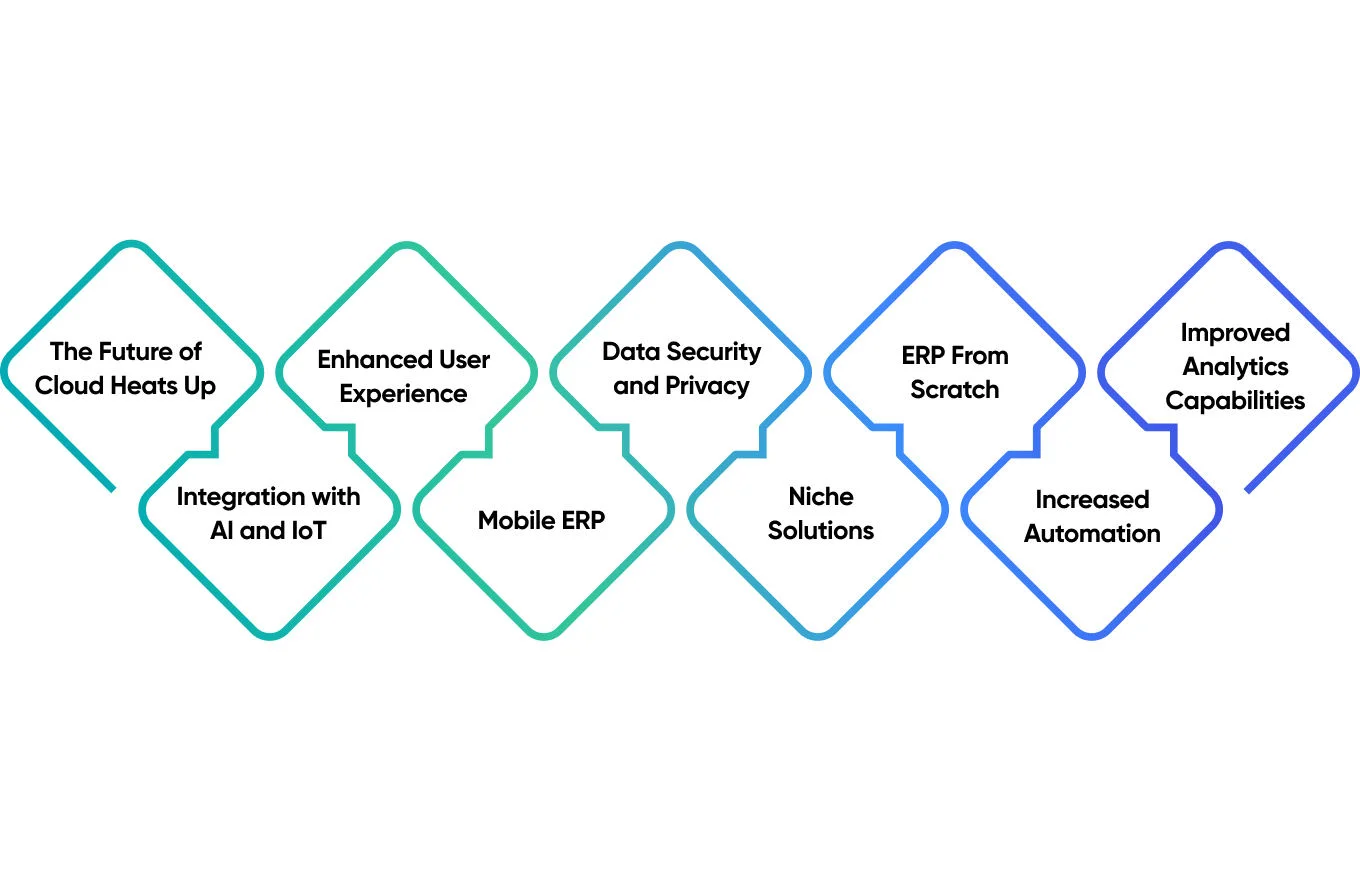
Let’s explore the top 9 current and future trends in ERP systems that are shaping the future of business management and operations.
1. The Future of Cloud Heats Up
Cloud-based ERP solutions are gaining immense prominence in today’s business world. These systems leverage the power of cloud computing to deliver a myriad of benefits:
- Flexibility: Cloud-based ERP solutions offer unparalleled flexibility, allowing organizations to scale resources up or down based on their evolving needs. This agility is especially crucial in an era of rapid change.
- Scalability: Businesses are migrating from on-premises systems to cloud-based ERP solutions, primarily to reduce infrastructure costs. The cloud’s scalable nature ensures that companies can efficiently manage and store their data without the burden of physical hardware maintenance.
- Real-time Data: The cloud enables access to real-time data from anywhere, providing organizations with up-to-the-minute insights into their operations. This empowers decision-makers with the information they need to make informed choices in a dynamic business environment.
- Enhanced Integration: Cloud-based ERP systems easily integrate with other cloud services and applications. This fosters a cohesive ecosystem where various tools work harmoniously to enhance ERP functionality, resulting in improved efficiency and productivity.
2. Integration with AI and IoT
The integration of Artificial Intelligence (AI) and the Internet of Things (IoT) is redefining how ERP systems operate:
- AI-Driven Insights: AI is at the forefront of transforming ERP by enabling advanced analytics, automation, and predictive capabilities. It empowers organizations to extract actionable insights from vast datasets, aiding in smarter decision-making.
- IoT Integration: IoT devices, equipped with sensors and data-gathering capabilities, are seamlessly integrating with ERP systems. This provides real-time data streams that enhance the accuracy of decision-making processes. From supply chain management to inventory optimization, the IoT-ERP duo is driving efficiency.
- Chatbots and Virtual Assistants: AI-driven chatbots and virtual assistants are becoming integral components of ERP systems. They enhance user experiences by streamlining interactions and automating routine tasks. This not only boosts productivity but also reduces the learning curve for users.
3. Enhanced User Experience
Recognizing that user adoption is paramount to the success of ERP systems, modern ERP solutions are increasingly focusing on user experience:
- User-Centric Design: ERP interfaces are now designed with the end-user in mind. User-centric design principles make these interfaces intuitive, easy to navigate, and aesthetically pleasing.
- Productivity Boost: Improved user experiences lead to increased productivity among employees. When users find the ERP system easy to use and understand, they’re more likely to embrace it as an integral part of their daily workflow.
4. Mobile ERP
As of 2022, there were approximately 6.6 billion smartphone users worldwide. The widespread use of mobile devices has ignited a growing demand for mobile ERP solutions:
- Remote Accessibility: Mobile ERP applications empower employees to access critical data and perform tasks remotely. This promotes flexibility and ensures that key personnel can make decisions and complete tasks while on the move.
- On-the-Go Decision-Making: Features like mobile dashboards and approvals enable on-the-go decision-making. This responsiveness can be a game-changer in scenarios where timely decisions are crucial.
5. Data Security and Privacy
In an age when data breaches and cyber threats are on the rise, ERP vendors are prioritizing data security and privacy:
- Blockchain Integration: Technologies like blockchain are being integrated into ERP systems to safeguard sensitive information. Blockchain’s inherent security features make it particularly suitable for protecting critical data.
- Advanced Encryption: Advanced encryption methods are becoming standard in ERP systems. These measures ensure that data remains secure and confidential, even in the face of determined cyberattacks.
- Compliance with Regulations: Compliance with data protection regulations, such as GDPR, is a top priority for ERP providers. Ensuring data privacy and security is not just a legal requirement but a fundamental obligation to customers and stakeholders.
6. Niche Solutions
As ERP systems evolve, businesses increasingly recognize the value of niche solutions tailored to specific industries or verticals. These niche ERP solutions are designed to address particular sectors’ unique needs and challenges, going beyond the one-size-fits-all approach. Here’s how this trend is shaping the ERP landscape:
- Industry-specific Functionality: Niche ERP solutions offer specialized functionality that aligns with the specific requirements of industries such as healthcare, manufacturing, retail, or construction. This results in more efficient processes and better compliance with industry regulations.
- Customization and Flexibility: Businesses can customize niche ERP solutions to fit their precise workflows and objectives. This level of flexibility allows organizations to adapt rapidly to changing industry dynamics and stay competitive.
- Competitive Advantage: By adopting a niche ERP solution, companies can gain a competitive advantage by optimizing operations and differentiating themselves in the market. These systems often come with pre-built industry best practices and modules that accelerate implementation.
7. ERP From Scratch
In some cases, businesses are opting to build their ERP systems from scratch rather than relying on off-the-shelf solutions. This approach allows for complete customization and control over the ERP system’s design and functionality. Here’s why ERP from scratch is gaining traction:
- Tailored Solutions: Building an ERP system from scratch enables organizations to create a solution that perfectly aligns with their unique processes and requirements. This level of customization can lead to significant efficiency improvements.
- Integration Excellence: When designing ERP from the ground up, companies can ensure seamless integration with their existing systems and third-party applications. This results in a unified ecosystem that streamlines data flow and decision-making.
- Future-Proofing: Building an ERP system from scratch provides the opportunity to future-proof the technology stack. Organizations can incorporate the latest technologies, such as AI, IoT, and blockchain, to stay ahead of industry trends.
8. Increased Automation
Automation is a transformative force within the realm of ERP systems, revolutionizing how businesses operate:
- Streamlined Processes: Automation eliminates the need for manual intervention in routine and repetitive tasks. This streamlines operations, reduces human error, and frees up valuable time and resources.
- Efficiency Gains: ERP systems are becoming hubs for process automation, encompassing everything from order processing and inventory management to invoice generation and payroll processing. This results in significant efficiency gains across various departments.
- Cost Reduction: By automating previously labor-intensive tasks, organizations can reduce labor costs and allocate resources more strategically. The cost savings associated with automation can be substantial, especially in the long run.
- Enhanced Accuracy: Automation ensures higher accuracy and consistency in data handling and processes. This minimizes errors and improves data quality throughout the organization.
9. Improved Analytics Capabilities
In the data-driven era, ERP systems are harnessing the power of advanced analytics to drive informed decision-making:
- Predictive Insights: Advanced analytics tools integrated into modern ERP solutions enable predictive analytics. By analyzing historical data and patterns, organizations can make data-driven predictions about future trends, demand, and customer behavior.
- Real-time Reporting: ERP systems now provide real-time reporting capabilities, giving decision-makers immediate access to critical information. This enables agile responses to changing market conditions and operational challenges.
- Data Visualization: Enhanced data visualization tools make it easier to interpret complex datasets. Interactive dashboards and graphical representations help users grasp insights quickly and make data-driven decisions.
- Customizable Metrics: ERP systems allow organizations to define and track key performance indicators (KPIs) specific to their goals and objectives. This customization ensures that the analytics focus on the metrics that matter most.
- Data Integration: ERP systems seamlessly integrate data from various sources, including external systems, sensors, and IoT devices. This holistic view of data enhances the accuracy and depth of analytics.
As we delve into these top ERP trends, it becomes evident that these systems are far from static. They are dynamic, adaptable, and integral to the modern business landscape. Whether through cloud-based solutions, the infusion of AI and IoT, prioritizing user experience, embracing mobility, or fortifying data security, ERP systems are evolving to meet the diverse needs of organizations in an ever-changing world.
The Future of ERP
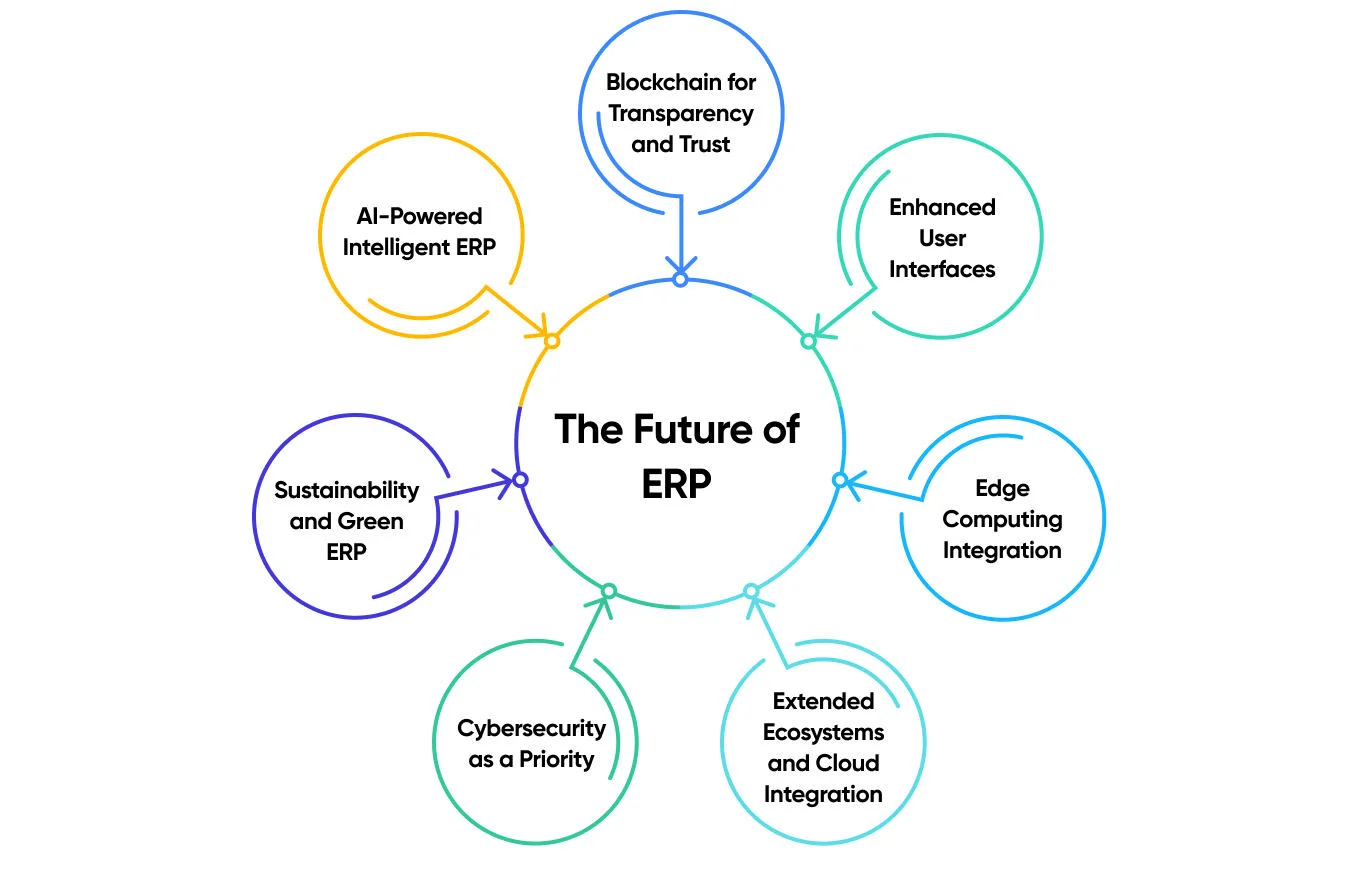
As we look ahead to the future of ERP systems, it’s evident that this technology will continue to evolve and adapt to the changing needs of businesses. Here’s a glimpse into what the future holds for ERP:
AI-Powered Intelligent ERP
The integration of Artificial Intelligence (AI) into ERP systems is set to become even more sophisticated. AI will not only assist with data analysis but also enable autonomous decision-making. Predictive maintenance, demand forecasting, and intelligent supply chain management are just a few areas where AI-powered ERP will shine.
Blockchain for Transparency and Trust
Blockchain technology will play a pivotal role in enhancing transparency and trust within ERP systems. It will find application in supply chain management, ensuring the traceability and authenticity of products. Additionally, blockchain will secure sensitive transactions, enhancing data security and accountability.
Enhanced User Interfaces
User interfaces in ERP systems will continue to evolve, becoming more intuitive and user-friendly. This evolution will go hand in hand with the increasing importance of enhanced user experiences. As ERP becomes more accessible to a broader range of users, interface design will prioritize simplicity and efficiency.
Edge Computing Integration
Edge computing is poised to become an integral part of ERP systems, especially in scenarios where real-time data processing is crucial. Edge devices will process data at the source, reducing latency and enhancing system responsiveness. This integration is particularly valuable in industries like manufacturing and logistics.
Extended Ecosystems and Cloud Integration
ERP systems will extend their reach to integrate with a broader ecosystem of tools and platforms. The trend of cloud integration will continue, ensuring seamless connectivity with other cloud-based services and applications. This interconnectedness will facilitate data exchange, automation, and enhanced functionality.
Cybersecurity as a Priority
As cyber threats become increasingly sophisticated, ERP vendors will elevate cybersecurity to a top priority. Advanced threat detection, intrusion prevention, and real-time monitoring will be standard features in ERP systems. Ensuring the safety of sensitive data and maintaining the trust of customers and partners will be paramount.
Sustainability and Green ERP
Environmental concerns are driving the development of Green ERP systems. These solutions will help organizations reduce their carbon footprint by optimizing resource usage, supply chain efficiency, and waste reduction. Sustainability will not only be a corporate responsibility but also a strategic advantage.
How to Identify the Stability of ERP?
Ensuring the stability of your Enterprise Resource Planning (ERP) system is essential for maintaining the smooth operation of your business processes. Here are five key strategies to help you identify and maintain the stability of your ERP system:
Regular Audits
Regular audits of your ERP system are crucial for evaluating its health and performance. Audits should encompass various aspects, including data accuracy, system responsiveness, and adherence to best practices. These audits can be conducted by internal teams or external experts and should aim to identify any potential issues or areas for improvement.
Performance Monitoring
Continuous performance monitoring is vital to ensure that your ERP system operates optimally. Employ monitoring tools and metrics to track system response times, resource utilization, and data processing efficiency. By identifying performance bottlenecks early, you can proactively address them and prevent disruptions to your business operations.
Upgrade Considerations
Regularly evaluate the need for ERP system upgrades. ERP vendors often release updates to improve system functionality, security, and performance. Staying current with these upgrades ensures that your system remains stable and benefits from the latest features and security patches. However, thorough testing is essential before implementing any upgrades to prevent potential compatibility issues.
Security Assessment
In an era of increasing cybersecurity threats, security assessment is paramount. Conduct periodic security audits to identify vulnerabilities and ensure that your ERP system is adequately protected. Implement advanced security measures, including multi-factor authentication, data encryption, and intrusion detection systems, to safeguard sensitive information.
User Training and Support
The stability of your ERP system is closely tied to how effectively your users interact with it. Prioritize user training and support to ensure that your staff can efficiently navigate the system and leverage its capabilities. Adequate training reduces the risk of user errors and enhances overall system stability. Maintain a responsive support system to address user issues promptly.
Final Thoughts
The stability of your ERP system is critical for the smooth and efficient operation of your business processes. Regular audits, performance monitoring, upgrades, security assessments, and user training and support are essential strategies to identify and maintain stability.
By proactively addressing potential issues and staying vigilant in your efforts to enhance system performance and security, you can ensure that your ERP system remains a reliable cornerstone of your organization’s success.
At SoftFormance, we specialize in ERP solutions and can provide expert guidance and support to help you maintain the stability and optimal performance of your ERP system.
Contact us today to learn more about how we can assist you in maximizing the value of your ERP investment and ensuring the long-term success of your business. Your stable and efficient ERP system is just a click away.
Frequently Asked Questions (FAQ)
ERP (Enterprise Resource Planning) systems are crucial for businesses because they play a pivotal role in streamlining operations, improving efficiency, enhancing decision-making, and ensuring compliance with industry regulations. ERP systems provide a unified platform for managing various aspects of a business, from finance and HR to supply chain and customer relationship management. This integration fosters transparency, facilitates data-driven decision-making, and helps organizations operate more effectively and competitively.
Several factors drive companies to implement ERP systems, including operational efficiency, competitive advantage, compliance to industry regulations and reporting standards, scalability, and enhanced customer experience.
To adapt to future ERP trends, consider these practical steps: Embrace cloud-based ERP solutions for flexibility, scalability, and cost-efficiency. Leverage AI for advanced analytics and automation and integrate IoT for real-time data. Prioritize user-centric design principles to make ERP interfaces intuitive, catering to the mobile workforce with mobile ERP applications. Moreover, integrate advanced security measures like blockchain and encryption while ensuring compliance with data protection regulations.
Implementing ERP technology can have a significant positive impact on a company’s performance. It leads to improvements in process optimization, operational efficiency, data-driven decision-making, and customer satisfaction. ERP systems streamline operations, reduce errors, and provide real-time data insights, enabling organizations to operate more efficiently and effectively.
New ERP industry trends can benefit various business verticals. While the specific advantages may vary, industries such as manufacturing, retail, healthcare, and finance can tailor ERP solutions to meet their specific needs and challenges. For example, manufacturing can use IoT integration to enhance supply chain management, while healthcare can focus on compliance and patient data security. Ultimately, ERP solutions can be customized to align with the unique requirements of each industry.
Knowing ERP trends is the most essential learning to sustain the competitive market situations. Keep sharing more helpful contents.